There’s a certain kind of peace in stepping onto a tennis court early in the morning. The sun is just stretching its fingers over the horizon, the air carries that crisp freshness that makes every inhale feel full, and for a brief moment, everything else fades away. Tennis seems simple—two players, a net, a ball—but the experience is deeply nuanced. Every bounce, every pivot, and every serve is shaped not just by the players, but by the ground beneath their feet.
One of the first things I noticed when I started learning the game was how much space matters. Not just in terms of strategy, but physically. The dimensions of the court subtly influence your movement, your stamina, and even the way you think about each shot. That’s where understanding the tennis court size ↗ becomes essential. Whether you’re designing a backyard court or playing in a local club, knowing the right proportions ensures fair play, proper spacing, and a rhythm that feels natural rather than cramped or exaggerated. There’s a reason professionals obsess over this; it affects both performance and the enjoyment of the game.
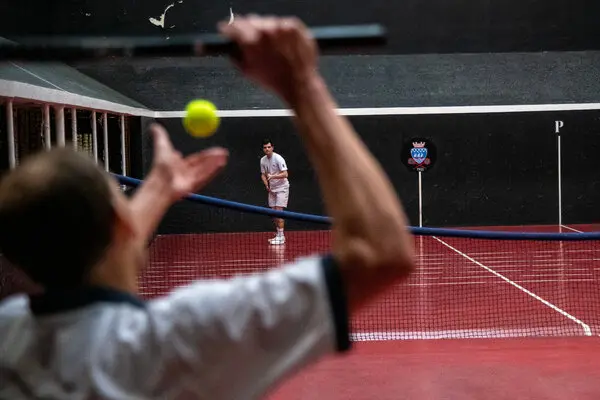 Beyond size, there’s the question of surface and layout. Stepping onto a clay court feels entirely different from a hardcourt or grass surface. Clay slows the ball, allowing rallies to stretch longer, while grass can be lively, unpredictable, almost playful in its rebound. Hard courts are precise, giving immediate feedback on every stroke. And while the surface matters, so does the construction. Even the slope, drainage, and alignment affect how the ball behaves and how your body responds. A well-designed court invites movement, making footwork feel fluid and intuitive.
I remember walking onto a freshly built court for the first time and being struck by the subtle harmony of the space. Lines were crisp but unobtrusive, the net tension just right, and the surrounding area framed the court perfectly. That’s when I realized that a tennis court ↗ isn’t merely a rectangle of asphalt or clay—it’s an environment carefully crafted to support the rhythm of play. It holds every serve, every volley, and every small victory. It becomes part of the experience without demanding attention, quietly shaping the flow of the game.
Outdoor courts bring an extra layer of life to the game. Wind, sunlight, humidity—all these factors interact with your shots, subtly influencing trajectory and speed. You learn to anticipate, adjust, and respect the environment in ways that indoor courts simply don’t teach. There’s a meditative quality to this interaction: a rally isn’t just a contest of skill but a conversation with the space itself. And when the court has been constructed thoughtfully, it responds predictably, letting your focus remain on the ball rather than worrying about uneven surfaces or poor bounce.
Maintenance is surprisingly impactful too. A crack in the pavement, fading lines, or worn-out net posts can subtly undermine performance and enjoyment. A court that’s regularly maintained not only looks inviting but also gives players confidence. Each step, pivot, and jump feels reliable. The attention given to details—surface integrity, line markings, and overall balance—ensures that the game remains seamless and enjoyable.
Community often forms naturally around tennis courts. I’ve seen neighbors who barely spoke before meet to play doubles, beginners cheer each other on, and more seasoned players offering advice without expectation. The court acts as a neutral ground, a stage where skill, patience, and even social bonds develop simultaneously. In many ways, the court itself fosters connection, shaping both the game and the relationships built around it.
Even solo practice sessions are transformed by the right space. Hitting balls against a wall, perfecting serves, or working on footwork teaches patience and awareness. The court mirrors your movements, subtly highlighting strengths and areas for improvement. Over time, these interactions help develop a deeper understanding of your own rhythm and style, allowing you to grow as a player in ways that transcend mere technical skill.
Design is never one-size-fits-all. Backyard courts differ from professional training facilities, and clay, grass, or synthetic surfaces each have unique needs. Lighting, fencing, and even the surrounding environment contribute to playability and comfort. Small details—like net height, line clarity, and subtle slopes—make a huge difference. Experienced builders understand these nuances, ensuring that every aspect of the court enhances play rather than hindering it.
There’s also a storytelling element embedded in every court. Childhood lessons, friendly weekend matches, tournament preparation, and the occasional spontaneous rally all leave invisible imprints. Over time, a well-constructed court becomes more than a playing field; it’s a witness to growth, memories, and the quiet victories that don’t make the scoreboards but matter just as much.
The best courts, in my experience, feel alive. They encourage movement, foster focus, and provide a stable canvas for both success and learning. A thoughtfully constructed court respects players’ needs, offering reliable surfaces, accurate dimensions, and a sense of balance that allows the game to flow naturally. Every bounce, every swing, and every step is enhanced, not hindered.
Ultimately, a tennis court is more than a rectangle with a net. It’s a crafted environment that nurtures skill, shapes experience, and encourages connection. It’s a space where practice becomes discovery, where games become stories, and where every player, beginner or pro, finds a rhythm that belongs uniquely to them. A court done well doesn’t just host a game—it inspires it, making every match a little richer, every rally a little more alive, and every moment on the court something to savor.
So next time you step onto a tennis court, pause for a moment. Feel the space, notice the lines, and appreciate the invisible craft that holds it all together. A properly designed court doesn’t just allow play—it invites it, embraces it, and becomes part of the story you’re creating with every point.