There’s a quiet sort of satisfaction in stepping onto a tennis court, the kind that doesn’t announce itself loudly but settles into your bones as soon as your shoes touch the surface. It’s early morning, the sun barely brushing the horizon, and there’s this subtle hush in the air that makes every bounce, every swing, feel significant. Tennis isn’t just about the game; it’s about rhythm, focus, and sometimes even small revelations that sneak in when you’re trying to perfect a serve. And strangely enough, all of that begins with the space itself.
I never realized how much thought goes into a court until I started looking into the process of building one. It’s easy to assume it’s just a flat rectangle with a net and a few lines. But anyone who’s been involved in a proper build will tell you there’s an artistry, a quiet engineering behind it. Every layer, from the foundation to the surface, affects the game in subtle but meaningful ways. This is where a reliable tennis court construction company ↗ comes into play. They aren’t just contractors; they’re curators of experience, carefully translating a vision into a functional, lasting court.
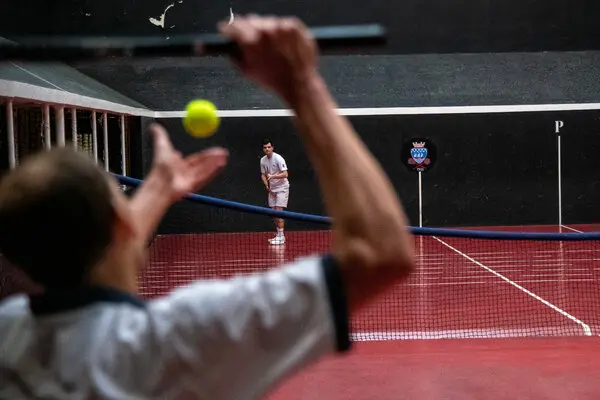 One thing that often surprises newcomers is how much difference the surface makes. A clay court slows the game, encouraging long rallies and thoughtful play. Grass courts feel lively, playful, sometimes almost unpredictable. Hard courts are crisp and precise, pushing players to adapt quickly. And beneath all of this is the magic ingredient: the materials. That’s why working with a trusted tennis court flooring manufacturer ↗ matters. The choices they make determine durability, bounce consistency, and even comfort for players over time. It’s not glamorous, but it’s the backbone of every memorable rally.
I’ve spent countless mornings on different courts, and what’s remarkable is how the space subtly shapes interactions. A court isn’t just a surface; it’s a container for concentration, connection, and even little frustrations. You learn to read the boundaries, to anticipate how the ball reacts, to adjust to minor quirks in texture or slope. These imperfections, oddly enough, add character. They remind you that tennis isn’t about perfection—it’s about persistence, patience, and small adaptations.
Outdoor courts bring another dimension entirely. The wind, the light, the temperature, even the humidity—all of it changes how the ball behaves and how you feel while playing. I’ve played matches where a gentle breeze felt like a friend, carrying the ball just where I wanted it, and others where it became a subtle antagonist, forcing me to think two steps ahead. There’s a life lesson there: control what you can, adapt to what you can’t, and enjoy the rhythm in between.
Maintenance is a surprisingly underrated aspect of tennis. A court can start off perfect and, without care, slowly deteriorate. Cracks, fading paint, uneven surfaces—they all affect play and, by extension, the joy of the game. That’s why experienced builders and flooring specialists emphasize durability from day one. It’s not just about aesthetics; it’s about preserving experience. There’s something quietly reassuring about walking onto a well-maintained court, knowing it will respond predictably to every footfall and swing. It feels like stepping into a space that’s cared for, almost like it respects your time and effort.
Another thing that fascinates me is how courts foster community. You see neighbors who never spoke exchanging tips, beginners cheering each other on, and seasoned players quietly mentoring newcomers. Even doubles matches, where strategy becomes a dance, rely heavily on this shared environment. And it all starts with thoughtful design. The net height, line accuracy, and even surface material influence the interactions on court. It’s almost poetic how a rectangle of carefully planned space can hold so many stories.
I’ve also noticed that a well-built court affects mindset. There’s a subtle confidence that comes from knowing the ground beneath your feet will respond reliably. You take risks with serves, attempt challenging volleys, and gradually push your limits without fear of an unpredictable surface sabotaging your efforts. That trust between player and space is priceless, and it’s often invisible to anyone who hasn’t spent serious time on the court.
Beyond sport, courts have a meditative quality. Even alone, hitting balls against a wall or practicing serves in quiet focus teaches patience and resilience. You start noticing little patterns: how your body moves, how the ball responds to spin, how your mental state influences precision. The court becomes a teacher, a mirror reflecting both strengths and areas for growth. There’s an intimacy in this relationship that few other recreational spaces offer.
It’s also worth noting that building a court is not a one-size-fits-all process. Every location, climate, and purpose demands thoughtful customization. A backyard court differs vastly from a professional training facility, just as a clay court requires different care than a hardcourt or synthetic surface. This is why working with experienced construction companies and flooring specialists isn’t a luxury—it’s essential. They help translate ideas into functional, lasting spaces, taking care of details that players might not even consciously notice but will deeply appreciate over years of play.
And then there’s the intangible part: the memories courts help create. Childhood lessons, friendly rivalries, late-night practice sessions, weekend tournaments—they all live in the lines, the net, the very surface beneath your feet. You don’t always realize it at the moment, but courts witness growth, perseverance, and fleeting victories that linger long after the final point is played.
In the end, a tennis court is more than just a recreational space. It’s a stage, a teacher, a community hub, and a canvas for personal growth. Every decision—from construction to flooring, layout to maintenance—shapes not only the game but the experience of the players themselves. Stepping onto a thoughtfully built court feels like entering a space designed for possibility, where every swing, every rally, and every moment of quiet focus is honored.
So whether you’re dreaming of building your own court, upgrading an existing one, or simply appreciating the next match you watch, take a moment to think about what makes a court truly great. It’s not just the lines or the net, or even the skill of the players. It’s the careful planning, the durable materials, and the subtle artistry behind every layer of construction. Because in the world of tennis, the court itself is part of the game—and when done right, it’s nothing short of magical.